Direct Mining Purchase: New Regulations for Legal通关 of Raw Stones

Aug 19, 2025 By

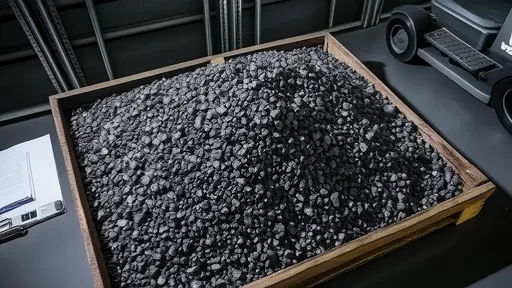
The global gemstone trade is undergoing significant regulatory changes as major mining countries implement new direct-purchasing protocols for rough stones. These measures aim to streamline cross-border transactions while combating illegal mining and smuggling operations that have plagued the industry for decades. At the heart of these reforms lies a delicate balance between facilitating legitimate commerce and enforcing stricter chain-of-custody documentation.

African nations leading the charge have begun requiring digital mineral passports for all exported rough diamonds and colored gemstones. Tanzania recently launched its Blockchain-based certification system, creating immutable records from mine to marketplace. "This isn't about adding bureaucracy," explains Geoffrey Mwale, Tanzania's Minister of Mineral Resources. "We're building trust through transparency - when buyers know exactly where their stones originated, everyone wins." The system has already reduced smuggling incidents by 37% in its first quarter of operation.

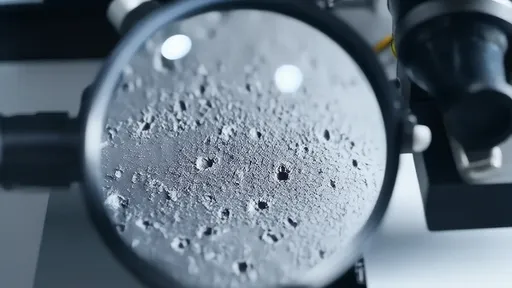
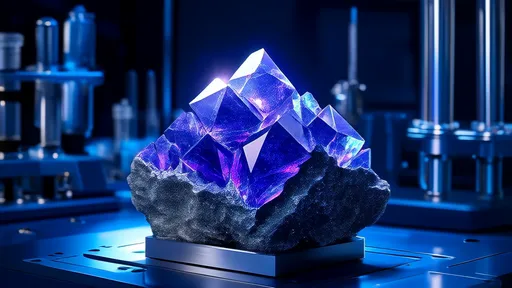
South America's emerald trade faces unique challenges under the new regulations. Colombian authorities now mandate that all rough emerald parcels exceeding 50 carats undergo spectroscopic fingerprinting before export. This creates optical signatures that can be matched to specific mining concessions. Brazilian regulators took this concept further by implementing micro-laser inscriptions visible only under magnification. "The inscription includes GPS coordinates of the mine and date of extraction," says Rio de Janeiro customs official Carla Mendes. "We've intercepted three shipments with falsified origins since January."

Asian markets are responding with mixed reactions to these changes. While Thailand's gem cutting centers welcome the increased legitimacy, some smaller operations struggle with compliance costs. The Bangkok Gem and Jewelry Association recently hosted workshops explaining how to verify the new documentation. "Proper paperwork actually speeds up customs clearance," notes association president Voravit Techavijit. "Our members processing certified stones see 40% faster turnaround at Suvarnabhumi Airport."

European Union import protocols now require dual verification - matching physical stones to their digital certificates while confirming the miner's export license remains valid in real-time. Antwerp's diamond district has adapted quickly, with most major dealers upgrading their verification labs. "We installed LIBS spectrometers that can authenticate a stone's origin in 90 seconds," shares De Beers veteran Marc Van de Velde. "The technology pays for itself by preventing seven-figure mistakes."

North American retailers face pressure to document their supply chains more thoroughly. The U.S. Jewelry Council recently published guidelines for maintaining "mine-to-market" records that survive customs audits. Tiffany & Co. now includes blockchain IDs on high-value gem certifications. "Customers appreciate knowing their sapphire didn't fund conflict," remarks CEO Anthony Ledru. "The extra documentation becomes a selling point."

Australian opal miners pioneered an unexpected solution - embedding nanoparticles containing mining license data directly into rough stones. The microscopic tags don't affect gem quality but provide foolproof identification. "We're licensing the technology to Canadian jade producers," says Perth-based inventor Dr. Eleanor Chang. "The particles glow under specific frequencies - customs agents love how quickly they can verify shipments."

These regulatory shifts create new opportunities for ethically sourced gems. Mines complying with international labor and environmental standards report premium pricing for their certified rough. "Our rubies now command 22% over market," says Mozambique's Gemfields representative Isabel Nkosi. "Buyers pay more knowing children didn't dig these stones." The Kimberly Process Certification Scheme plans to incorporate many of these new tracking methods into its 2025 guidelines.

Logistics providers have emerged as unexpected beneficiaries. DHL and FedEx now offer "white glove" gem shipping services with humidity-controlled containers and armed transport for high-value parcels. "We trained 300 specialists in the new documentation requirements," says DHL's precious cargo director Henrik Sørensen. "Proper paperwork means fewer delays - our compliant shipments clear customs 65% faster."

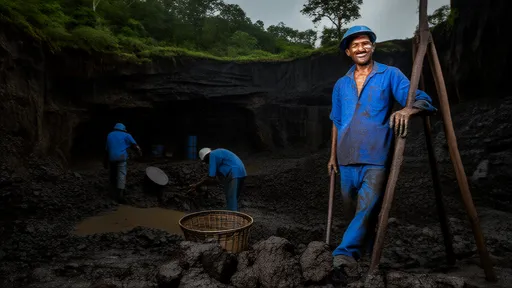
Despite progress, challenges remain. Artisanal miners in Madagascar struggle with the cost of compliance, while some Indian cutters resist sharing profit data with upstream suppliers. The World Bank has launched a $50 million fund to help small operators adopt tracking technologies. "Inclusivity is crucial," stresses project manager Rajiv Kapoor. "If only corporate mines can afford compliance, we'll push legitimate small miners into the black market."

The changes extend beyond paperwork - they're reshaping industry relationships. Miners now negotiate directly with manufacturers, bypassing traditional intermediaries. "We video call cutting factories to show them rough parcels still in the ground," says Zambia's emerald miner Joseph Banda. "They commit to purchases before we even extract stones." This direct trade reduces price speculation and ensures fairer compensation for mining communities.

Consumer awareness campaigns are amplifying these reforms. The Responsible Jewellery Council's new "Know Your Gem" initiative educates buyers about asking for origin documentation. Major auction houses now require provenance records for all gem lots. "A Burmese ruby without proper papers sells for 30% less," notes Christie's jewelry head Rahul Kadakia. "The market is voting for transparency."

Technology providers race to develop better verification tools. Startups like GemTrace and MineLedger offer affordable blockchain solutions for smaller miners. De Beers' "Tracr" platform now tracks over 60% of global diamond production. "We're moving toward an industry where every facet of every gem tells its true story," predicts Tracr CEO Gareth Penny. "The stones themselves will become their own certificates."

These reforms arrive as generational change sweeps the trade. Younger buyers demand ethical sourcing, while tech-savvy miners embrace traceability. "My grandfather mistrusted paperwork," smiles third-generation Colombian emerald dealer Santiago Lopez. "I sleep better knowing my inventory won't be confiscated at customs." As dawn breaks on this new era of transparency, the gem trade appears ready to shed its murky past for a more accountable future.

Recommend Posts
Jewelry

E-Waste Gold Recycling: New International Standard 99.99% Purity Certification

By /Aug 19, 2025

The global electronics industry has reached a pivotal moment in its approach to sustainability and resource recovery. A new international standard for gold recovered from electronic waste has emerged, setting the benchmark at an unprecedented 99.99% purity. This development marks a significant leap forward in the circular economy, challenging traditional mining practices and redefining what's possible in urban mining.
Jewelry

Optimizing Gemstone Facet Angles with Ray Tracing Algorithms

By /Aug 19, 2025

The art of gemstone cutting has entered a new era with the integration of ray tracing algorithms, a computational technique borrowed from advanced computer graphics. Traditionally, master cutters relied on experience, intuition, and manual calculations to determine the optimal facet angles that would maximize a gem's brilliance and fire. Today, sophisticated software powered by ray tracing is revolutionizing this ancient craft, enabling precision that was previously unimaginable.
Jewelry

Lunar Dust Coating Wear Resistance Test for Aerospace Materials

By /Aug 19, 2025

The relentless challenge of lunar dust abrasion has pushed material scientists to develop innovative protective coatings for spacecraft and equipment destined for Moon missions. Recent tests conducted at NASA's Glenn Research Center demonstrate significant progress in combating this persistent threat to lunar exploration hardware.
Jewelry

Centennial Workshop: The Secret Techniques of Venetian Chain Making

By /Aug 19, 2025

The art of chain-making in Venice is a centuries-old tradition that has been passed down through generations of skilled artisans. Nestled in the labyrinthine alleys of this floating city, a handful of workshops continue to preserve techniques that date back to the Renaissance. These chains are not mere accessories; they are intricate works of art, each link forged with precision and care. The process is slow, deliberate, and deeply rooted in Venetian history, making every piece a testament to the city’s enduring craftsmanship.
Jewelry

A Miner's Diary: Chronicles of Sri Lanka's Sapphire Mines

By /Aug 19, 2025

The sun had barely risen over the mist-covered hills of Ratnapura when the first pickaxe struck stone. The sound echoed through the valley, a familiar rhythm to the men who’ve spent their lives digging for treasure beneath the earth. This is Sri Lanka’s gemstone country, where the ground yields sapphires as blue as the Indian Ocean—if you’re willing to risk everything to find them.
Jewelry

Resin Amber: Yellowing Resistance Index Δb < 1.0

By /Aug 19, 2025

The world of synthetic resins has witnessed a significant breakthrough with the development of amber-like resins boasting an exceptionally low yellowing index. These advanced materials, characterized by a Δb value of less than 1.0, are redefining industry standards for color stability in polymer applications. As manufacturers increasingly prioritize long-term aesthetic performance, this new generation of resins offers unparalleled resistance to the unsightly yellowing that traditionally plagued plastic products exposed to light and environmental stressors.
Jewelry

Voltage-Controlled Titanium: Precise Chromatography Generation Technology

By /Aug 19, 2025

The realm of materials science has witnessed a groundbreaking advancement with the development of voltage-controlled color-changing titanium. This innovative technology, which allows for precise chromatogram generation through electrical modulation, is poised to revolutionize industries ranging from aerospace to consumer electronics. Unlike traditional pigment-based coloration methods, this approach leverages the unique photonic properties of titanium oxides under electric fields, enabling dynamic and programmable color shifts with unprecedented accuracy.
Jewelry

Synthetic Cobalt Spinel: A New Breakthrough in Lab Cultivation

By /Aug 19, 2025

The world of gemstone synthesis has reached a remarkable milestone with recent breakthroughs in laboratory-created cobalt spinel. This dazzling blue material, long prized for its vivid coloration and durability, has traditionally been challenging to produce with the same optical properties as its natural counterpart. However, cutting-edge research from materials science laboratories across Europe and Asia has finally cracked the code, opening new possibilities for both the jewelry industry and technological applications.
Jewelry

Carbon Fiber Application: Aeromaterial-grade Bracket Reduces Weight by 40%

By /Aug 19, 2025

The aerospace industry has always been at the forefront of material innovation, constantly pushing boundaries to achieve better performance through advanced engineering solutions. Among these innovations, carbon fiber reinforced polymers (CFRP) have emerged as game-changers, particularly in structural components where weight savings directly translate to improved efficiency and reduced operational costs.
Jewelry

Jewelry Photography: Control of Reflection with Ring-Shaped Polarized Light

By /Aug 19, 2025

In the world of jewelry photography, capturing the true essence of a piece requires more than just a high-resolution camera and good lighting. One of the most challenging aspects is controlling unwanted reflections that can obscure the intricate details and brilliance of gemstones and metals. This is where circular polarizing light control comes into play, offering photographers a powerful tool to enhance their shots.
Jewelry

Ceramic Crown: Sintered Zirconia Density of 8.0g/cm³

By /Aug 19, 2025

The ceramics industry has reached a significant milestone with the successful development of zirconia-based ceramic inserts boasting a sintered density of 8.0 g/cm³. This achievement marks a substantial leap forward in material performance, particularly for applications requiring extreme wear resistance and structural integrity. Unlike conventional ceramic components that typically exhibit lower densities, this advancement opens new possibilities for high-stress industrial applications where material failure is not an option.
Jewelry

Direct Mining Purchase: New Regulations for Legal通关 of Raw Stones

By /Aug 19, 2025

The global gemstone trade is undergoing significant regulatory changes as major mining countries implement new direct-purchasing protocols for rough stones. These measures aim to streamline cross-border transactions while combating illegal mining and smuggling operations that have plagued the industry for decades. At the heart of these reforms lies a delicate balance between facilitating legitimate commerce and enforcing stricter chain-of-custody documentation.
Jewelry

High-End Customization: SOP Transformation for Customer Needs

By /Aug 19, 2025

In the world of luxury and bespoke services, the ability to transform client desires into tangible reality is both an art and a science. High-end customization demands more than just craftsmanship; it requires a meticulously designed process that ensures every client’s vision is not only understood but brought to life with precision. The journey from initial consultation to final delivery is a carefully orchestrated symphony of communication, creativity, and execution.
Jewelry

Independent Designer: Cost Control for Small Batch Gold Materials

By /Aug 19, 2025

In the competitive world of independent design, managing costs while maintaining quality is a constant challenge. For designers working with precious metals like gold, the stakes are even higher. Small-batch production offers a way to balance exclusivity with affordability, but controlling gold material costs requires strategic planning and creative problem-solving.
Jewelry

In Memory Jewelry: New Applications for Dark Spinel

By /Aug 19, 2025

The world of memorial jewelry has long been associated with traditional materials like black onyx, jet, or dark pearls. Yet a quiet revolution is occurring in this deeply personal sector as jewelers and grieving clients alike discover the profound beauty and symbolic resonance of dark spinel. This once-overlooked gemstone is emerging as a sophisticated alternative for mourning pieces, offering unexpected depth, durability, and contemporary elegance to commemorative designs.
Jewelry

Bridal Headpiece: Carbon Fiber Skeleton for Lightweight Design

By /Aug 19, 2025

The bridal industry has long been associated with tradition, elegance, and intricate craftsmanship. However, in recent years, a quiet revolution has been taking place behind the scenes—one that merges cutting-edge materials with the timeless beauty of wedding attire. At the forefront of this movement is the use of carbon fiber in bridal headpieces, a material more commonly associated with aerospace engineering and high-performance sports equipment than with delicate bridal accessories. This unexpected marriage of technology and tradition is redefining what’s possible in bridal fashion, offering brides unprecedented comfort, durability, and design flexibility.
Jewelry

Dinner Necklace: Quick-Release Pendant Load-Bearing Structure

By /Aug 19, 2025

The world of fine jewelry has always been a fascinating intersection of artistry and engineering. Among the most intriguing developments in recent years is the emergence of quick-release pendant systems for evening necklaces—a seemingly small innovation that has quietly revolutionized how women wear and interact with their jewelry. These mechanisms, often hidden from view, represent a triumph of micro-engineering that maintains aesthetic integrity while solving practical problems.
Jewelry

Seismic Gel Inlay Scheme for Mineral Specimens

By /Aug 19, 2025

In the world of mineral specimen preservation, a groundbreaking technique has emerged that promises to revolutionize how fragile geological treasures are displayed and protected. The seismic-resistant gel mounting system represents a fusion of cutting-edge materials science with traditional conservation practices, creating what experts are calling the most significant advancement in specimen preparation in decades.
Jewelry

Rising Value Curve Model for Emerging Designers: A Three-Year Perspective

By /Aug 19, 2025

The fashion industry has always been a dynamic and ever-evolving landscape, where fresh talent emerges at a rapid pace. Among these rising stars, a new breed of designers is making waves with their innovative approaches and rapid career trajectories. A fascinating pattern has emerged among these trailblazers: a three-year appreciation curve that has become a topic of intense discussion among industry insiders.
Jewelry

Thai Noodle Treasure: Bottom Reflection Optimization 2.0

By /Aug 19, 2025

In the heart of Thailand's central plains, Suphan Buri province has long been overshadowed by its more famous neighbors. While Bangkok draws tourists with its urban energy and Ayutthaya captivates with ancient ruins, this unassuming agricultural hub has quietly developed one of Southeast Asia's most innovative urban renewal projects. Dubbed "Backside Reflection Optimization 2.0," this multi-year initiative represents a quantum leap in how secondary cities approach heritage preservation and economic revitalization.