The global electronics industry has reached a pivotal moment in its approach to sustainability and resource recovery. A new international standard for gold recovered from electronic waste has emerged, setting the benchmark at an unprecedented 99.99% purity. This development marks a significant leap forward in the circular economy, challenging traditional mining practices and redefining what's possible in urban mining.
For decades, the concept of extracting precious metals from discarded electronics was often dismissed as a niche operation. However, with the rapid depletion of easily accessible mineral deposits and growing environmental concerns, e-waste recycling has transformed into a serious industrial endeavor. The newly established purity certification shatters previous assumptions about the quality of recycled gold, placing it on equal footing with freshly mined bullion.
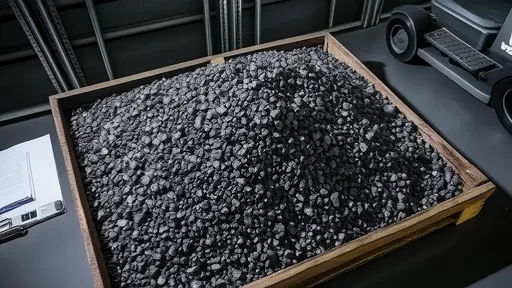
What makes this standard particularly remarkable is its timing. As consumer electronics continue proliferating at an astonishing rate, so does the mountain of obsolete devices. Industry analysts estimate that less than 20% of all electronic waste currently undergoes proper recycling. The remaining 80% either ends up in landfills or gets processed through informal channels, often with dangerous environmental and health consequences.
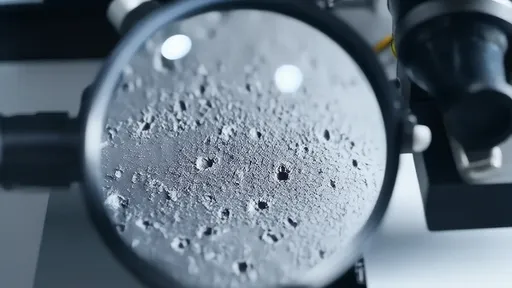
The technical achievement behind 99.99% purity deserves closer examination. Traditional gold refining from ore typically achieves this level through complex chemical processes. Matching this standard using recycled materials required overcoming unique challenges. Electronic components contain gold in minute quantities and in various forms - from plating on connectors to bonding wires in chips. The purification process must remove not only base metals but also trace contaminants specific to electronics manufacturing.
Several cutting-edge technologies have converged to make this possible. Advanced sorting systems using artificial intelligence can now identify and separate components with gold content more efficiently than ever before. Novel leaching solutions have been developed that target gold with greater specificity while generating less hazardous byproducts. Perhaps most crucially, electrolytic refining techniques originally developed for mining applications have been adapted and optimized for recycled feedstock.
Financial institutions and commodity markets are taking notice. For years, recycled gold faced skepticism about its quality and consistency. The new certification removes this barrier, potentially opening floodgates for investment in urban mining operations. Major refineries are already retooling their operations to meet the standard, recognizing that e-waste represents not just an environmental imperative but a substantial business opportunity.
The environmental implications are profound. Gold mining ranks among the most destructive industrial activities, with a single ounce requiring the movement of approximately 250 tons of earth. By contrast, recovering that same ounce from recycled electronics uses about 1/100th of the energy and produces minimal landscape disruption. When scaled across global gold demand - which exceeds 4,000 tons annually - the potential impact becomes staggering.
Consumer electronics manufacturers face both challenges and opportunities from this development. On one hand, they must now consider the full lifecycle of their products more carefully, as the materials they use gain recognized residual value. On the other hand, they can leverage this in sustainability messaging and potentially develop new revenue streams from product take-back programs. Some forward-thinking companies have already begun designing products with end-of-life recovery in mind, knowing that higher purity standards make such efforts more economically viable.
The human dimension of this story shouldn't be overlooked. In developing nations where informal e-waste processing has long provided livelihoods - albeit dangerous ones - the new standard creates potential pathways to formalization. By establishing clear quality benchmarks, it becomes feasible to integrate these workers into safer, more regulated systems while still preserving their economic roles. Several pilot programs in Asia and Africa are already demonstrating how this transition might work in practice.
Regulatory bodies worldwide are beginning to respond to these developments. The European Union has proposed legislation that would mandate minimum recycled content in electronics, while several U.S. states are considering similar measures. These policies, combined with the new purity standard, create powerful incentives for manufacturers to participate in closed-loop material systems. Industry observers predict that within five years, recycled gold could account for 15-20% of total supply, up from less than 5% today.
Technical challenges remain, of course. While the purity standard has been achieved, scaling production to industrial levels will require continued innovation. Collection systems need improvement to capture more e-waste before it enters landfills or gets shipped to unregulated processors. And the economics must work not just for gold but for other precious metals recovered simultaneously, like silver and palladium.
The psychological barrier may prove just as important to overcome as the technical ones. For centuries, gold's value has been tied to its extraction from the earth, with all the romance and mythology that entails. Convincing consumers, investors, and industry that metal pulled from old smartphones carries equal worth represents a cultural shift. Early adopters in the jewelry sector are leading the way, with several luxury brands now offering collections made exclusively from recycled precious metals.
Looking ahead, the implications extend far beyond gold. The same principles and technologies being developed for gold recovery could apply to other materials critical to modern technology. Rare earth elements, lithium, cobalt - all face supply constraints and environmental concerns with traditional mining. The success of high-purity recycled gold provides both a template and an inspiration for tackling these challenges.
As the world grapples with resource scarcity and environmental degradation, this breakthrough couldn't come at a more crucial time. The new 99.99% purity standard does more than just validate a process - it redefines our relationship with materials, proving that what we once considered waste can become the foundation for a more sustainable future. The age of urban mining has truly arrived, and its potential is only beginning to be realized.

By /Aug 19, 2025

By /Aug 19, 2025
By /Aug 19, 2025

By /Aug 19, 2025

By /Aug 19, 2025

By /Aug 19, 2025

By /Aug 19, 2025

By /Aug 19, 2025

By /Aug 19, 2025

By /Aug 19, 2025
By /Aug 19, 2025
By /Aug 19, 2025

By /Aug 19, 2025

By /Aug 19, 2025

By /Aug 19, 2025

By /Aug 19, 2025

By /Aug 19, 2025

By /Aug 19, 2025

By /Aug 19, 2025

By /Aug 19, 2025
