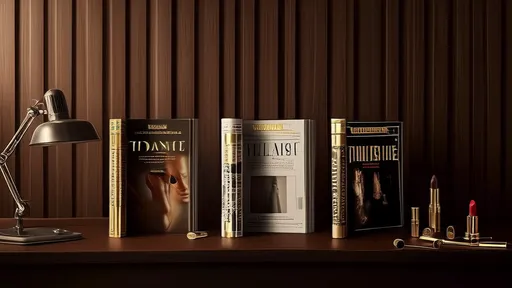
In the ever-evolving world of fashion journalism, certain literary works have profoundly shaped the careers and perspectives of those who document this vibrant industry. These books serve not merely as references but as transformative guides that redefine how fashion is perceived, critiqued, and narrated. For many seasoned fashion journalists, these texts are foundational, offering insights that extend beyond trends and into the cultural, historical, and psychological underpinnings of style. They are the silent mentors on the shelves, whose pages have been dog-eared and annotated by professionals seeking depth in a field often mischaracterized as superficial.
One such seminal work is Fashion Writing and Criticism by Peter McNeil and Sanda Miller. This book is frequently hailed as a cornerstone for aspiring and established fashion journalists alike. It moves past the basic how-tos of reporting and delves into the art of critical analysis within fashion. McNeil and Miller argue that fashion journalism should not be dismissed as frivolous but respected as a discipline that intersects with art, politics, and identity. The authors provide frameworks for evaluating collections, interviewing designers, and contextualizing fashion within broader societal movements. For many journalists, this book was the first to legitimize their craft in an academic sense, encouraging a more rigorous and thoughtful approach to writing. It teaches that every garment tells a story, and it is the journalist’s role to uncover and articulate that narrative with precision and empathy.
Another transformative text is The End of Fashion by Teri Agins. Published at the turn of the millennium, Agins’ work is a provocative examination of how the fashion industry shifted from dictating trends to responding to consumer desires. For fashion journalists, this book was a revelation. It challenged the traditional top-down model of fashion reporting, where editors and designers set the agenda, and instead highlighted the rise of street style, fast fashion, and the democratization of style through media. Agins’ investigative prowess demonstrates how journalism can peel back the glossy surface of the industry to reveal its economic and cultural mechanics. Reading this book often marks a turning point for journalists, inspiring them to pursue more investigative, business-oriented stories rather than mere seasonal trend reports. It empowers writers to ask harder questions about sustainability, labor practices, and the real impact of fashion on global markets.
Valerie Steele’s Fashion and Eroticism is yet another book that has radically altered the trajectory of many fashion journalists’ careers. Steele, a historian and director of The Museum at FIT, explores the intimate relationship between clothing and desire, arguing that fashion is deeply intertwined with human sexuality and identity. This book encourages journalists to look beyond the aesthetic and consider the psychological and sociological dimensions of what people wear. For reporters, it opens up avenues for stories that connect fashion to broader themes of body image, gender expression, and cultural taboos. Steele’s scholarly yet accessible prose shows how fashion journalism can be both intellectually rigorous and engaging, pushing writers to infuse their work with interdisciplinary research and nuanced commentary. It is a testament to how deep, thematic exploration can elevate fashion writing from mere commentary to critical cultural analysis.
In a similar vein, Deluxe: How Luxury Lost Its Luster by Dana Thomas has been a game-changer for journalists focusing on the high-end market. Thomas meticulously investigates the transformation of luxury brands from family-owned artisanship to corporate-owned behemoths driven by profit. Her expose-style narrative reveals the hidden costs of luxury, from environmental degradation to the dilution of brand heritage. For fashion journalists, this book is a masterclass in investigative reporting within the fashion sphere. It demonstrates the power of thorough research, candid interviews, and a critical eye when covering the glamorous facade of luxury. Many journalists credit this book with inspiring them to pursue long-form, investigative pieces that hold the industry accountable, rather than simply celebrating its outputs. It underscores the importance of integrity and curiosity in fashion journalism, urging writers to dig deeper and challenge the status quo.
Lastly, Women in Clothes edited by Sheila Heti, Heidi Julavits, and Leanne Shapton has redefined how fashion journalists approach personal style and everyday dress. Unlike traditional fashion texts, this book is a collaborative project featuring conversations, surveys, and essays from hundreds of women about their relationships with clothing. It emphasizes that fashion is not about runways or celebrities but about personal identity, memory, and daily life. For journalists, this work is a reminder that the most compelling stories often come from ordinary people. It encourages a more inclusive, ethnographic approach to fashion reporting, where the focus is on real experiences rather than industry hype. This book has inspired many to pivot towards human-interest angles, exploring how clothing functions in diverse lives and cultures, thus making fashion journalism more relatable and profoundly human.
These five books collectively represent a shift in fashion journalism from a niche interest to a critical, multifaceted field of study. They have equipped journalists with the tools to analyze, investigate, and narrate fashion with greater depth and responsibility. For those who have immersed themselves in these pages, the impact is clear: a career not just reporting on hemlines and hues, but on the very fabric of culture itself. These texts remind us that fashion is a lens through which we can examine humanity, and it is the journalist’s privilege—and duty—to bring that view into focus.
By /Aug 21, 2025
By /Aug 21, 2025
By /Aug 21, 2025
By /Aug 21, 2025
By /Aug 21, 2025

By /Aug 21, 2025
By /Aug 21, 2025
By /Aug 21, 2025

By /Aug 21, 2025
By /Aug 21, 2025

By /Aug 21, 2025
By /Aug 21, 2025
By /Aug 21, 2025

By /Aug 21, 2025
By /Aug 21, 2025
By /Aug 21, 2025
By /Aug 21, 2025

By /Aug 21, 2025

By /Aug 21, 2025

By /Aug 21, 2025
