In the not-so-distant past, the idea of creating a perfectly tailored suit, a custom-fitted prosthetic limb, or a uniquely designed piece of furniture from a digital file seemed like pure science fiction. Today, it is an emerging reality, thanks to the rapid and relentless advancement of additive manufacturing, more commonly known as 3D printing. This technology is quietly orchestrating a revolution in customization, promising a future where mass production gives way to mass personalization, and the concept of "one size fits all" becomes a relic of a bygone era. We are standing at the precipice of a new industrial and consumer paradigm, moving towards what can be termed the ultimate form of bespoke creation: a world literally shaped to fit the individual.
The journey of 3D printing began decades ago in industrial labs, a specialized tool for rapid prototyping. Engineers would use it to create rough, often fragile, models of parts before committing to expensive traditional manufacturing processes. For years, it remained a niche, albeit powerful, tool for designers and large corporations. However, the last fifteen years have witnessed an explosion in accessibility and capability. The expiration of key patents opened the floodgates for innovation, leading to a dramatic drop in printer costs and a surge in material options. No longer confined to brittle plastics, modern 3D printers can now work with metals, ceramics, advanced polymers, and even living cells. This evolution has shifted the technology's role from merely creating prototypes to producing final, functional, and often superior end-use products.
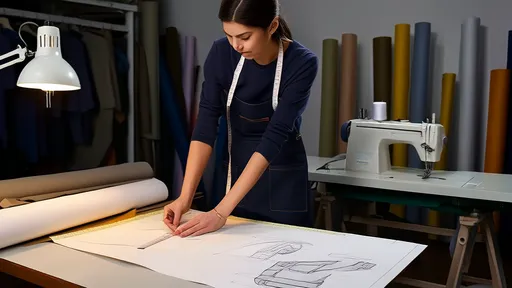
At the heart of this custom-made future is the profound shift from subtractive to additive processes. Traditional manufacturing is often a story of waste: you start with a block of material—wood, metal, plastic—and you cut, mill, drill, and lathe away everything that isn't your final product. It is a process defined by removal. 3D printing, in stark contrast, is defined by addition. It builds objects layer by microscopic layer, using only the material that is absolutely necessary. This fundamental difference is revolutionary. It means complex, hollow, and intricate geometries that are impossible to achieve with traditional methods can be created with ease. More importantly, it means that altering a design requires no retooling of massive factory machines; it simply requires a change in the digital code. This digital nature is the key to customization.
Nowhere is the impact of this bespoke revolution more tangible and life-changing than in the medical field. The human body is the ultimate example of unique, custom design; no two people are exactly alike. 3D printing is finally allowing medical technology to catch up to this biological reality. Consider prosthetics and orthotics. Traditionally, these devices are expensive, generic, and often uncomfortable. A 3D-printed prosthetic limb, however, can be digitally designed from a 3D scan of a patient's residual limb, ensuring a perfect, comfortable socket fit. It can be made lighter, stronger, and even aesthetically personalized with patterns or colors the patient chooses, all for a fraction of the traditional cost. This is not just about function; it's about identity and dignity.
The innovation extends far beyond limbs. Surgeons now use 3D-printed, patient-specific models of organs or complex bone structures to meticulously plan and practice surgeries, reducing operation times and improving outcomes. Dental labs print perfect-fitting crowns, bridges, and aligners tailored to an individual's mouth. The true frontier, however, lies in bioprinting. Researchers are making significant strides in printing with bio-inks composed of living cells, aiming to one day create functional tissues and even organs for transplantation. Imagine a future where instead of waiting years on a transplant list, a new kidney or skin graft is printed on demand, perfectly matched to the recipient to eliminate rejection. This is the pinnacle of customization—healing the body with parts made for it and it alone.
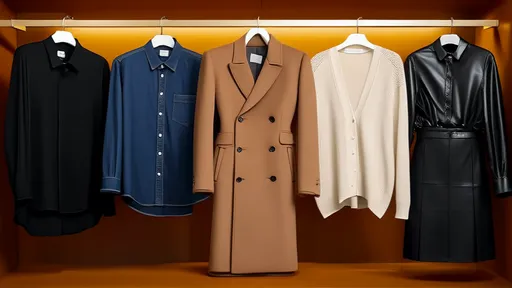
The wave of customization is also reshaping consumer goods and fashion, turning passive consumers into active co-creators. The footwear industry, for instance, is leveraging 3D scanning and printing to create shoes and insoles that conform precisely to the contours of an individual's foot. This offers unparalleled comfort and performance, addressing common issues like plantar fasciitis or uneven pressure distribution. Major brands are investing heavily in this technology, seeing it as the future of athletic gear and everyday wear.
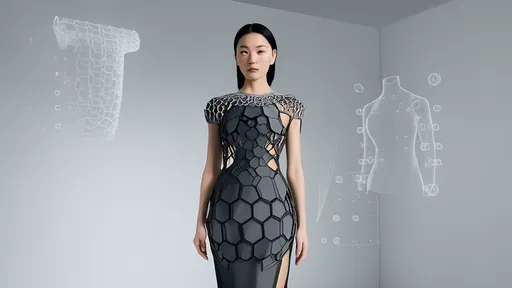
In the world of high fashion, designers are using 3D printing to create intricate, avant-garde pieces that would be impossible to craft by hand. From elaborate, sculptural dresses to custom-fitted jewelry, the technology allows for a new form of artistic expression that is deeply personal. For the average consumer, platforms are emerging that allow them to customize everything from the design of their smartphone case to the shape of their eyeglass frames. They can tweak a digital model online, and have the unique product printed and shipped to their door. This democratizes design and manufacturing, challenging the very foundation of the retail industry and its reliance on inventory and standardized sizes.
The implications for industrial manufacturing and supply chains are equally profound. The concept of "spare parts" is being redefined. Instead of maintaining vast warehouses of parts for everything from aging aircraft to discontinued household appliances, companies can simply store digital files. When a part is needed, it can be printed on-site or at a local printing hub, drastically reducing logistics costs, wait times, and waste. This is a move towards a decentralized manufacturing model. In remote locations—be it a rural community, a military forward operating base, or a spacecraft on a long-duration mission—the ability to print a needed tool or component on demand is transformative. It builds resilience and independence into systems that were previously vulnerable to supply chain disruptions.
However, the path to this customized utopia is not without its significant obstacles. The current speed of printing, while improving, is still too slow for high-volume production. The strength and long-term durability of some 3D-printed materials, particularly polymers, can still lag behind their traditionally manufactured counterparts, especially in high-stress applications. There are also major intellectual property concerns. If any physical object can be scanned and replicated, how do we protect the designs and inventions of creators? The legal and regulatory frameworks for this new paradigm are still in their infancy, struggling to keep pace with the technology's rapid development.
Furthermore, the environmental promise of "less waste" has a counterpoint. The energy consumption of some industrial 3D printers is high, and the proliferation of plastic-based consumer printers raises concerns about plastic waste if these items are not recycled properly. The sustainability of additive manufacturing depends heavily on using renewable energy sources and developing robust recycling systems for printed materials.
Despite these challenges, the trajectory is clear. 3D printing is more than just a novel way to make things; it is a foundational technology that enables a fundamental shift towards personalization. It is dismantling the economic logic of mass production that has dominated for over a century. We are moving towards a world where products are made to order, not to forecast; where value is derived from perfect fit and personal expression, not just low cost; and where the line between creator and consumer becomes beautifully blurred.
The ultimate form of bespoke is not just about tailoring objects to our measurements, but about tailoring them to our lives, our needs, and our identities. It is a future where our environment, from the medical devices that heal us to the shoes we walk in and the tools we use, is truly, intimately, our own. The factory of the future may not be a sprawling complex of assembly lines, but a network of printers, each humming away, meticulously building a unique future, one personalized layer at a time.

By /Aug 21, 2025

By /Aug 21, 2025

By /Aug 21, 2025
By /Aug 21, 2025

By /Aug 21, 2025

By /Aug 21, 2025

By /Aug 21, 2025

By /Aug 21, 2025

By /Aug 21, 2025

By /Aug 21, 2025

By /Aug 21, 2025

By /Aug 21, 2025
By /Aug 21, 2025

By /Aug 21, 2025

By /Aug 21, 2025

By /Aug 21, 2025

By /Aug 21, 2025
By /Aug 21, 2025

By /Aug 21, 2025
By /Aug 21, 2025
